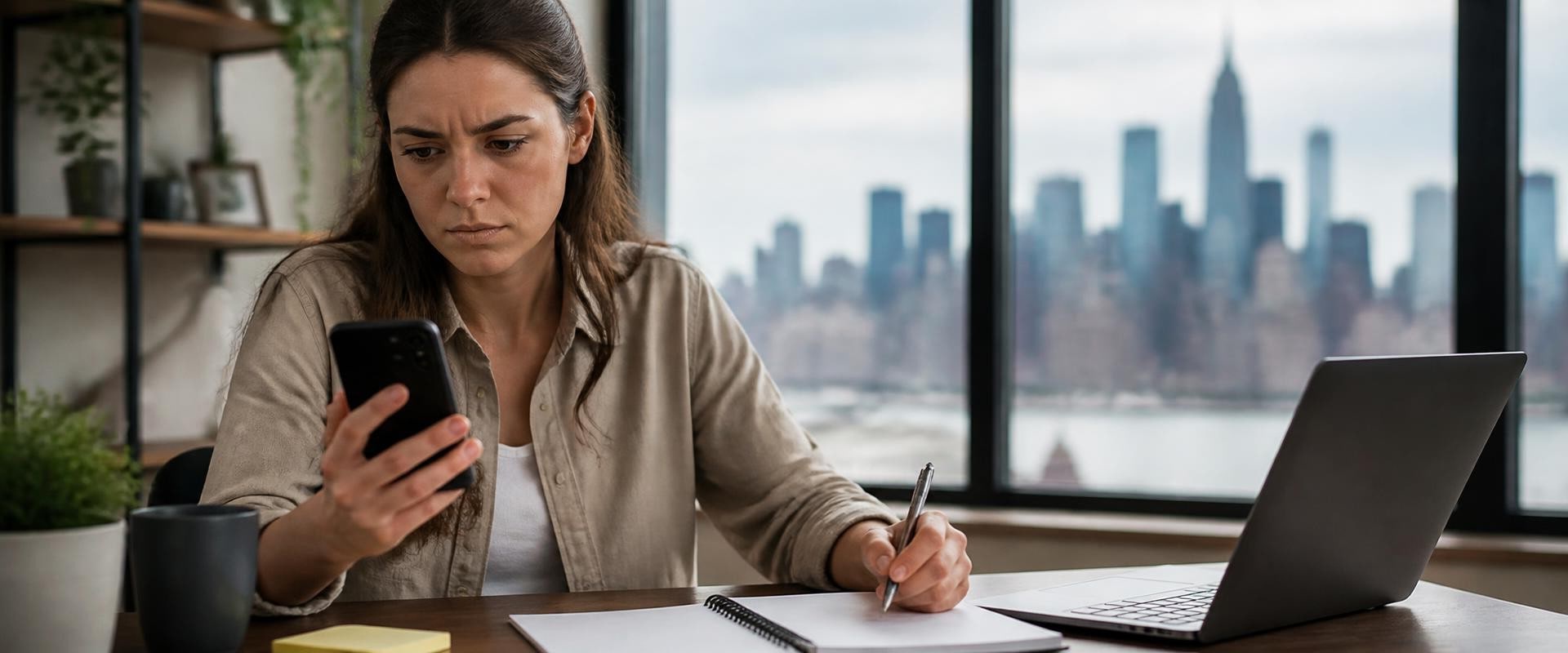
Where can New York residents report illegal robocalls?
Consumers receiving unwanted telephone sales calls have several options for reporting suspected violations.
New York's Department of State administers important state telemarketing protections.
Federal agencies also receive complaints involving unwanted calls, marketing texts, and potential violations of federal rules.
The appropriate complaint process depends on the type of communication and the suspected violation.
For example, a call to a number registered on the National Do Not Call Registry may raise concerns under state and federal telemarketing requirements.
A prerecorded call made without legally required consent may involve separate restrictions.
Reporting suspected violations can help regulators identify businesses or calling campaigns that warrant investigation.
How to document unwanted telephone calls
Accurate records are useful when submitting a complaint or considering legal action.
Consumers should preserve the date and time of each suspicious communication.
The telephone number displayed on caller identification may also be useful, although displayed numbers can be falsified.
When possible, consumers should record the company name, advertised product, and statements made by the caller.
Voicemail messages and screenshots can provide additional evidence.
A written record of requests to stop calling may be particularly important when the consumer continues receiving communications afterward.
Consumers should avoid altering original evidence.
Keeping a consistent record makes it easier to explain what happened and distinguish separate communications.
Fast facts about reporting robocalls in New York
New York consumers can report unwanted sales calls even when they are uncertain whether the conduct supports a private lawsuit.
Regulatory complaints and civil lawsuits serve different purposes.
A government complaint may help an agency investigate unlawful calling practices.
A private lawsuit seeks relief authorized by an applicable statute.
New York Section 399-z allows administrative enforcement of telemarketing requirements, while Section 399-p provides private remedies for certain automated calling violations.
Federal TCPA claims may also be available when the specific legal requirements are satisfied.
Consumers should not assume that filing a complaint automatically begins a lawsuit or produces financial compensation.
What happens after a complaint is submitted?
An agency may review the information provided and determine whether additional investigation is appropriate.
Some complaints help identify broader patterns involving repeated calls, misleading business identification, or registry violations.
Regulators may seek records from businesses or pursue enforcement proceedings when supported by the evidence and their authority.
However, individual complainants may not receive a detailed investigation report or a personal financial award.
Consumers interested in potential civil remedies can seek advice from a qualified attorney.
An attorney can assess the applicable law, available evidence, possible exemptions, and legal filing deadlines.
The strength of a potential claim depends on more than the number of unwanted calls received.
Common questions around reporting robocalls in New York
Can consumers report calls from unknown numbers?
Yes. Even when the caller's identity is uncertain, available call details can be included in a complaint.
Does filing a complaint stop future calls?
Not necessarily. Reporting may support enforcement, but it does not guarantee that unwanted communications will end.
Should consumers preserve unwanted voicemails?
Yes. Original messages may provide useful evidence about the caller, purpose, and nature of the communication.
Learn more: https://robocalllawsuit.com/autodialer-laws/new-york/


